
Lent is a season of liberation
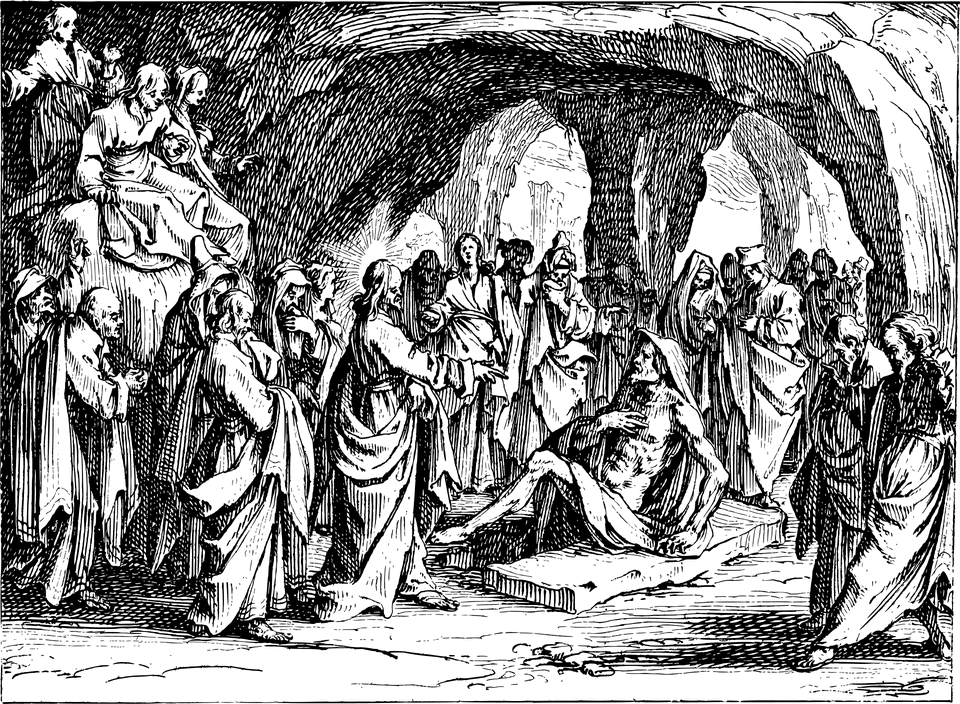
Before I came to community, I directed the RCIA team for my parish. We held a retreat for our catechumens and candidates on a Saturday during the period of Purification and Enlightenment. The three Sundays of this period were times of prayer and minor exorcisms during which the catechumens were questioned or scrutinized as to their readiness to receive the sacraments of initiation at the Easter Vigil. The retreat, led by a School Sister of Notre Dame serving our parish, is still vivid in my mind because it engaged all the senses of the three Gospels of the third, fourth and fifth Sundays of Lent. During the reading and reflection on of the Gospel of the raising of Lazarus, the sponsor of each catechumen bound them with strips of cloth. As we pray lectio on this Gospel, we, too, are present as the story unfolds.
We unpack the Gospel through both the chronology of the events and the relationships revealed. It is easy for us to hear the first part of a familiar Gospel and think to ourselves, sure, I know this story, it ends when Lazarua is raised by Jesus. That familiarity may cause us to negate the nuances of cultural norms, burial customs and the relationships between Jesus, Martha, Mary and Lazarus, the Jewish religious authorities, and his disciples. It is important to recognize that this event occurs near the end of Jesus’ public ministry, at a time when his own death is drawing closer.
John’s Gospel is a relational Gospel.The story is prefaced by articulating the relationships with his disciples and his close friends, Lazarus, Martha and Mary. We have heard of the three before, particularly the incident of Jesus’ visit and the dialogue with Martha in which he tells her that Mary has chosen the better part. Here, Jesus enters their community following the illness and death of Lazarus—they are all grieving the loss. The local Jewish community has come to comfort his sisters and share in their grief. We do the same. When one of our sisters dies, we join with their family in the grief, yes, but then in the celebration of their life.
We often question an untimely death. It is part of our expectation that a long life must precede death in a logical timeline. However, it is rarely so. Both Martha and Mary question the timing of Jesus arrival; both believe that his timely presence could have saved Lazarus from dying. Their statement “If you had been here …” leads to their great profession of faith.
“I have come to believe that you are the Christ, the Son of God, the one who is coming into the world.”
In one of the presentations done in our parish during the initiation process, catechumens and candidates were given framed copies of the Nicaean Creed by a member of the parish that they did not know. Sponsors who witnessed the solemnity of this affirmation of belief commented that it caused them to make their own reflection of the Creed and their opportunity to become what they believe.
It’s always interesting to observe the change of liturgical seasons and the change of the creeds we recite as part of the Eucharistic liturgy. The way we stumble over the differences in language between the Nicaean Creed and the Apostles Creed tells that the recitation becomes rote rather than reflective—are we taking time, for instance during Lent, to pray with the Apostles Creed and to examine our beliefs and who Jesus is for us.
Belief at this point of the Lenten story calls us to look at this Gospel in the context of Jesus’ resurrection. Of course, Lazarus is not resurrected but resuscitated—he will die again, but it is a timely placement for us to see how Jesus experiences grief—and how we do so. We are told of Jesus’ profound grief over the death of Lazarus; he grieves with the community of Lazarus. But in the depth of his emotions, we perhaps also see how Jesus grieves his coming death as well. It is also interesting to see how Jesus involves the community in the release of Lazarus from the bondage of death, Jesus calls Lazarus loudly from the depth of the tomb—but the community is instructed to untie him—to set him free, to liberate him.
Lent is a season of liberation, and we are also called to assist with the liberation of others as Jesus has also liberated us. We have the privilege of sponsoring and working in ministries that assist in the liberation of our local Lazarus. We are called to touch the unclean, to risk being changed by the experience. As we reflect during these last few weeks of the Lenten season, as we incorporate works of mercy with our penance, let us reflect on the injustice in our systems and institutions. As we, too, resist injustice in our world, grant us the courage to recognize Jesus in our neighbors and grieve not only for the dead we know, but for the ones who fear to see. Grant them, and us, courage.
